High-Temperature Gas Push Plate Furnace Driving Continuous Ceramic Sintering Efficiency
In recent years, the demand for high-performance ceramic components has increased significantly across industries such as electronics, telecommunications, and advanced manufacturing. As a result, continuous sintering equipment such as the Electronic Ceramic Firing High-Temperature Gas Push Plate Furnace has become a critical solution for manufacturers seeking stable production and consistent product quality.
This type of furnace is specifically designed for high-temperature sintering processes, supporting a wide operating temperature range from 1400°C to 1600°C, with a maximum design temperature reaching up to 1700°C. Such high thermal capability makes it ideal for processing advanced materials including zirconia ceramics, alumina (95% and 99%) ceramics, and 5G ceramic components.
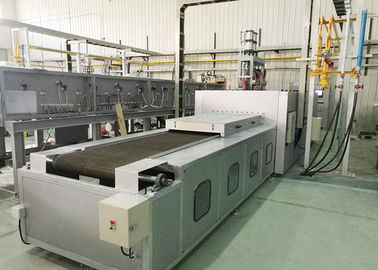
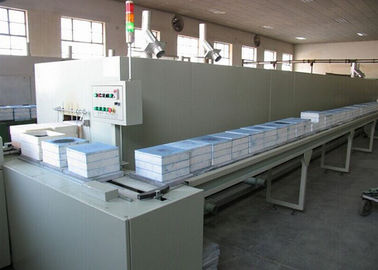
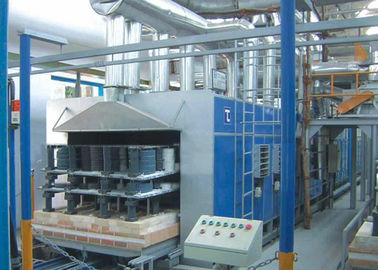
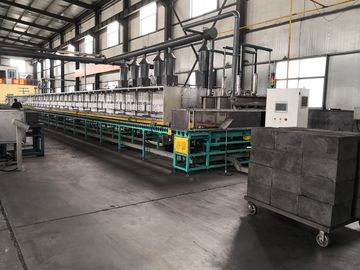
One of the key advantages of the gas push plate furnace lies in its continuous production capability. Unlike batch furnaces, the push plate system enables uninterrupted material flow, significantly improving productivity. The furnace chamber length can be customized between 9 to 15 meters, allowing manufacturers to scale production according to capacity requirements.
Temperature uniformity is another critical factor in ceramic sintering. With a precise control accuracy of ±5°C in the constant temperature zone, the furnace ensures consistent densification and material performance. This is achieved through a multi-zone heating system, typically consisting of 5 to 8 heating zones and up to 16 temperature control points. Both upper and lower heating elements are independently controlled, ensuring optimal heat distribution.
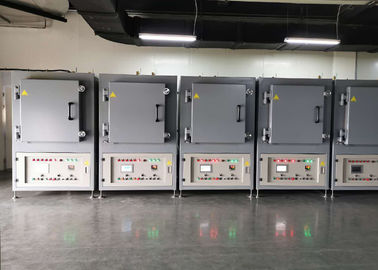
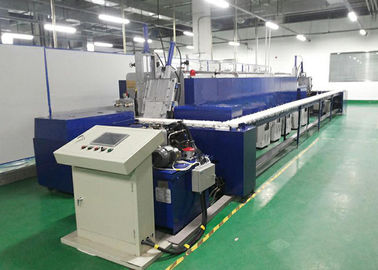
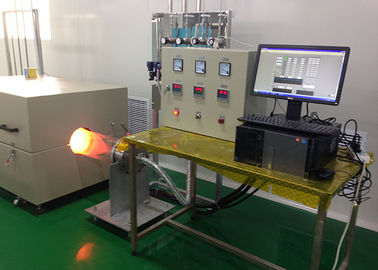
The control system integrates SCR power control with intelligent PID adjustment, combined with PLC and touch screen automation. This enables real-time monitoring and automatic parameter adjustments, reducing human intervention and minimizing operational errors. For B2B manufacturers, this translates into lower labor costs and higher production reliability.
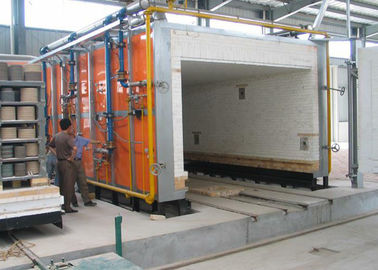
From a structural perspective, the furnace adopts a modular assembly design. This not only simplifies installation and maintenance but also allows for flexible upgrades. The propulsion system uses a fully automatic hydraulic external circulation mechanism, ensuring smooth and stable movement of push plates during operation.
In terms of heating elements, silicon molybdenum rods are used, providing excellent high-temperature stability and long service life. This reduces maintenance frequency and ensures consistent thermal performance over extended production cycles.
Applications of this furnace are extensive. It is widely used in the production of electronic ceramics, structural ceramics, and advanced functional materials. With the rapid development of 5G technology, the demand for high-precision ceramic substrates has further accelerated the adoption of such advanced sintering equipment.
For global manufacturers targeting markets in Europe, North America, and Southeast Asia, adopting a high-efficiency gas push plate furnace is essential to remain competitive. It enables not only higher output but also better product consistency, which is critical for meeting international quality standards.
In conclusion, the Electronic Ceramic Firing High-Temperature Gas Push Plate Furnace represents a reliable and scalable solution for continuous ceramic sintering. Its advanced temperature control, automation features, and modular design make it a preferred choice for modern ceramic production lines.


 Your message must be between 20-3,000 characters!